
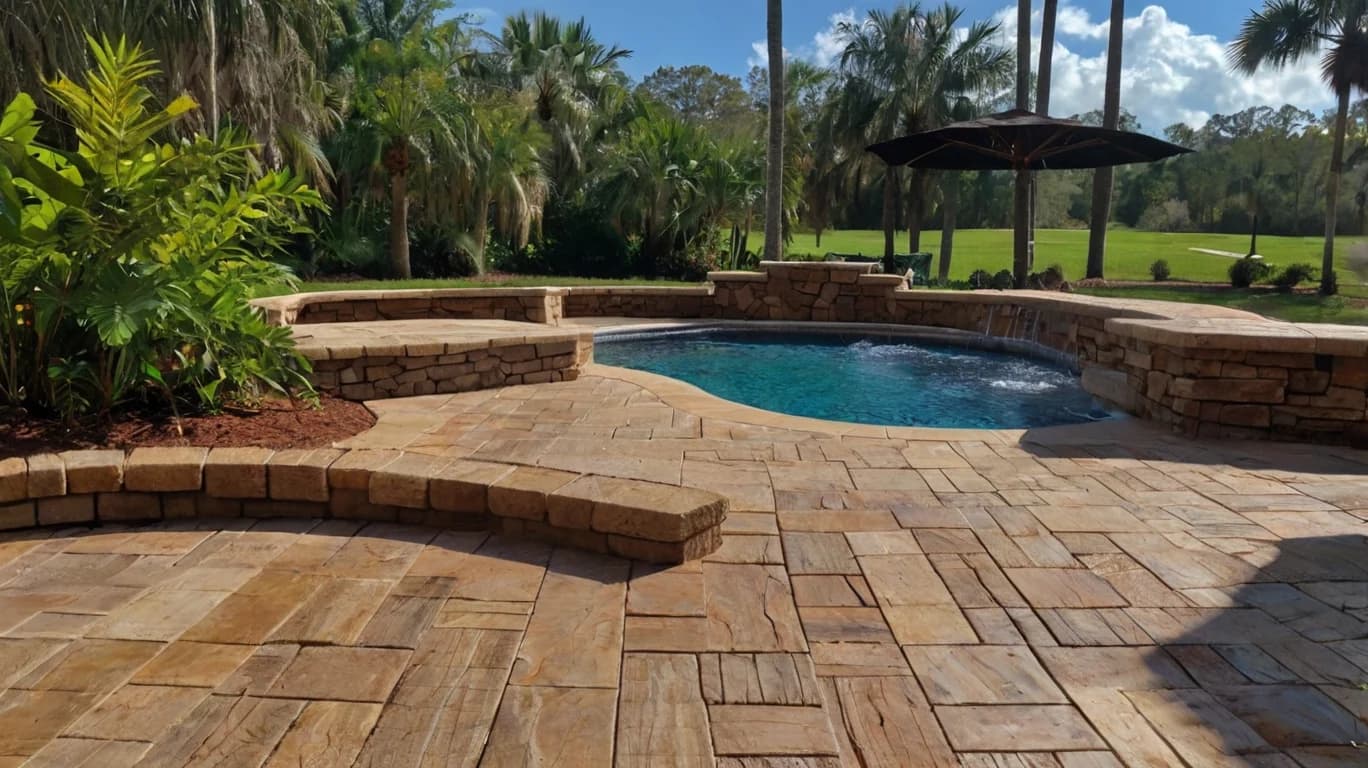
Construction
Patio and Deck Materials in Florida: What Contractors Should Specify on the Drawings
Material choices get made in the showroom; the problems show up in the details. A comparison of Florida patio and deck materials for contractors, and the notes your drawings need so the crew builds it right the first time.
July 30, 2024
Most patio and deck material decisions get made in a showroom or from a sample board: the client likes a color, a texture, a price. That's fine. But the problems that bring a crew back months later rarely come from the choice of material. They come from what the drawings didn't say about it.
A paver patio that settles because the base wasn't specified. A composite deck that's too hot to walk on next to the pool. Fasteners that rust out in two seasons. Water that drains toward the house.
In Florida, with heat, humidity, salt air, pools and hurricane season, those details matter more than almost anywhere else. This guide is for contractors and designers who want the material choice and the specification to hold up.
How common materials compare in Florida
Every material is a trade-off. Here's how the usual options behave in Florida conditions:
Material | Heat underfoot | Slip near water | Maintenance | Watch out for |
|---|---|---|---|---|
| Broom-finished concrete | Moderate | Good when textured | Low | Cracking without proper joints; stains |
| Concrete pavers | Moderate (lighter colors run cooler) | Good | Low to moderate | Settling if the base isn't specified; joint sand loss |
| Travertine | Cooler than most options | Good when tumbled or unfilled | Moderate (sealing) | Pricier; needs a solid base |
| Porcelain pavers | Moderate | Varies by product | Low | Must be rated for exterior wet areas |
| Pressure-treated pine | Moderate | Fair; slick when wet | High | Wrong treatment level; rot at ground contact |
| Composite / PVC decking | Can get very hot, especially dark colors | Fair to good | Low | Heat near pools; expansion gaps |
| Tropical hardwood (ipe) | Moderate | Fair | Moderate (oiling) | Cost; fastening into very dense wood |
These are general behaviors, not product guarantees. Always check the manufacturer's data (especially heat, slip resistance and exterior-use ratings) for the specific product you're specifying.

What the drawings should say
Choosing the material is the easy part. These are the specification notes we see missing most often, and the ones that cause callbacks.
1. The base, not just the surface
Pavers and stone are only as good as what's under them. A plan note that says "pavers" without a section leaves the base to whoever is installing that day.
Show a typical section with:
- Compacted aggregate base, with thickness
- Bedding layer (material and thickness)
- Edge restraint type
- Subgrade preparation notes, especially on fill or sandy soils
2. Slope and drainage
Water has to go somewhere, and in Florida it arrives fast. Every hard surface should show:
- Slope direction arrows, away from the house and away from the pool
- The design slope (about 1/4 inch per foot, roughly 2%, is a common starting point; confirm with the manufacturer and local requirements)
- Where the water ends up: lawn, drain, or swale
- Any change in impervious area, which many jurisdictions and HOAs track
Drainage that "works itself out" in the field usually works itself toward the foundation.
3. Pool decks need their own rules
Around pools, heat and slip resistance stop being preferences and become safety issues:
- Specify a textured or slip-resistant finish for wet areas, and use products rated for that use
- Think twice about dark composite or dark pavers where people walk barefoot
- Coordinate the deck with the pool safety barrier and gates. The deck layout can make or break barrier compliance (see our guide to Florida pool permit drawings)
4. Wood decks: treatment, connection and fasteners
Wood decks fail at the details, not in the boards:
- Specify the correct preservative treatment for each member. Lumber in contact with the ground or hard to replace needs a ground-contact rating (for example, AWPA use category UC4A or UC4B), not just "pressure-treated."
- Detail the ledger connection and flashing where the deck attaches to the house. This is one of the most common failure points in any deck.
- Specify corrosion-resistant fasteners and connectors. Near pools and on the coast, stainless steel (Type 316 near salt water) is worth the cost; standard galvanized hardware can corrode quickly.
- Show expansion gaps for composite and PVC boards per the manufacturer, since they move with Florida heat.
5. Wind is part of the design
Pergolas, shade structures, covered decks and screen enclosures are structures, and the Florida Building Code requires them to be designed for the wind speed at the site. The drawings should show uplift connections and anchorage, or reference the engineered drawings from the structure's manufacturer. "Attach per manufacturer" is not a connection detail.

A quick pre-construction check
Before a patio or deck set goes to the field, run through this:
- Material, finish and color called out for every surface
- Typical section for each surface type (base, bedding, edge)
- Slope arrows and design slope on every hard surface
- Drainage destination shown
- Slip-resistant finish specified for pool and wet areas
- Lumber treatment level and fastener material specified
- Ledger and flashing detail for attached decks
- Wind connections or engineered drawings referenced for covered structures
- Impervious area and HOA requirements checked
If any of these is missing, the decision will still get made. It just gets made on site.
Where Kronos GMT fits
We produce construction and permit drawings for outdoor living contractors, pool builders and design-build firms across Florida: site plans, sections, details and material schedules, plus 3D models and renders when the client needs to see it before approving. If your sets go out light on details because there's no time to draw them, that's the gap we fill.